

Right Place, Real Results: A Smarter Blueprint for Retail Expansion
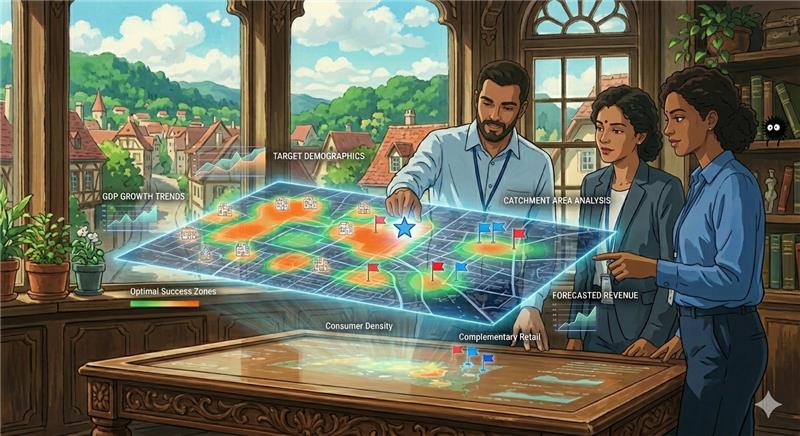
There are 3 reasons a business succeeds or fails — Location, Location, Location. Here is how we used data to help a major watch retailer scale their multi-brand boutiques confidently.
Growing a large retail brand is a major challenge. When a company already has over a hundred stores and wants to expand even further, the stakes are high. There are 3 reasons a business succeeds or fails — Location, Location, Location. Opening a new location costs a lot of money, and a bad choice can be a very expensive mistake. Many brands rely on guesswork, but there is a better way. At Latlong, we use data to help brands grow with confidence.
Here is how we solved a specific need for a major watch retailer looking to scale their multi-brand boutiques across the country.
Narrowing Down the Map
The first challenge was scale. With thousands of potential cities to choose from, the brand needed to know which ones offered the best chance of success. Latlong provided a visual tool that analyzed deep economic data across every urban area. We looked at local wealth, how fast a district was growing, and where the target age groups lived. We mapped where other popular brands were already located — if high-end clothing or footwear stores were doing well in an area, it was a strong signal the new boutiques would succeed there too. This turned a massive map into a clear, ranked list of top priority regions.
Finding the Perfect Spot
Once the right cities were chosen, the focus shifted to the exact address. A great city can still have bad streets, so we zoomed in on specific neighbourhoods to find the best fit. Our tools calculated a "catchment area" for any potential site — showing exactly who lived and worked nearby. We looked for lifestyle hubs like malls and colleges, and we mapped out exactly where competitors were located. By adding custom data like local rental costs, the brand could see if a specific spot was a smart financial investment.
Walmart's entry into Germany in 1997 is one of the most cited examples of how choosing the wrong market and wrong locations can sink even the world's biggest retailer. The cost: a $1 billion loss.
Predicting the Future
The most important question for the brand was how much a new store would sell. We took the mystery out of this by using forecasting. We compared each potential new site against similar stores the brand already operated. This model produced revenue predictions for the first two years — grounded in historical patterns, not hope. The leadership team could make expansion decisions based on facts, with quantified upside and downside scenarios in hand.
Expanding a large business should be a calculated move. By using location data, we helped this retailer move away from generic guesses and toward a strategy where every new store was built to win.

Put location to work.
See how latlong.ai products fit your team. Book a 30-minute walkthrough with our solutions team.