

Decoding India's New Food Economy
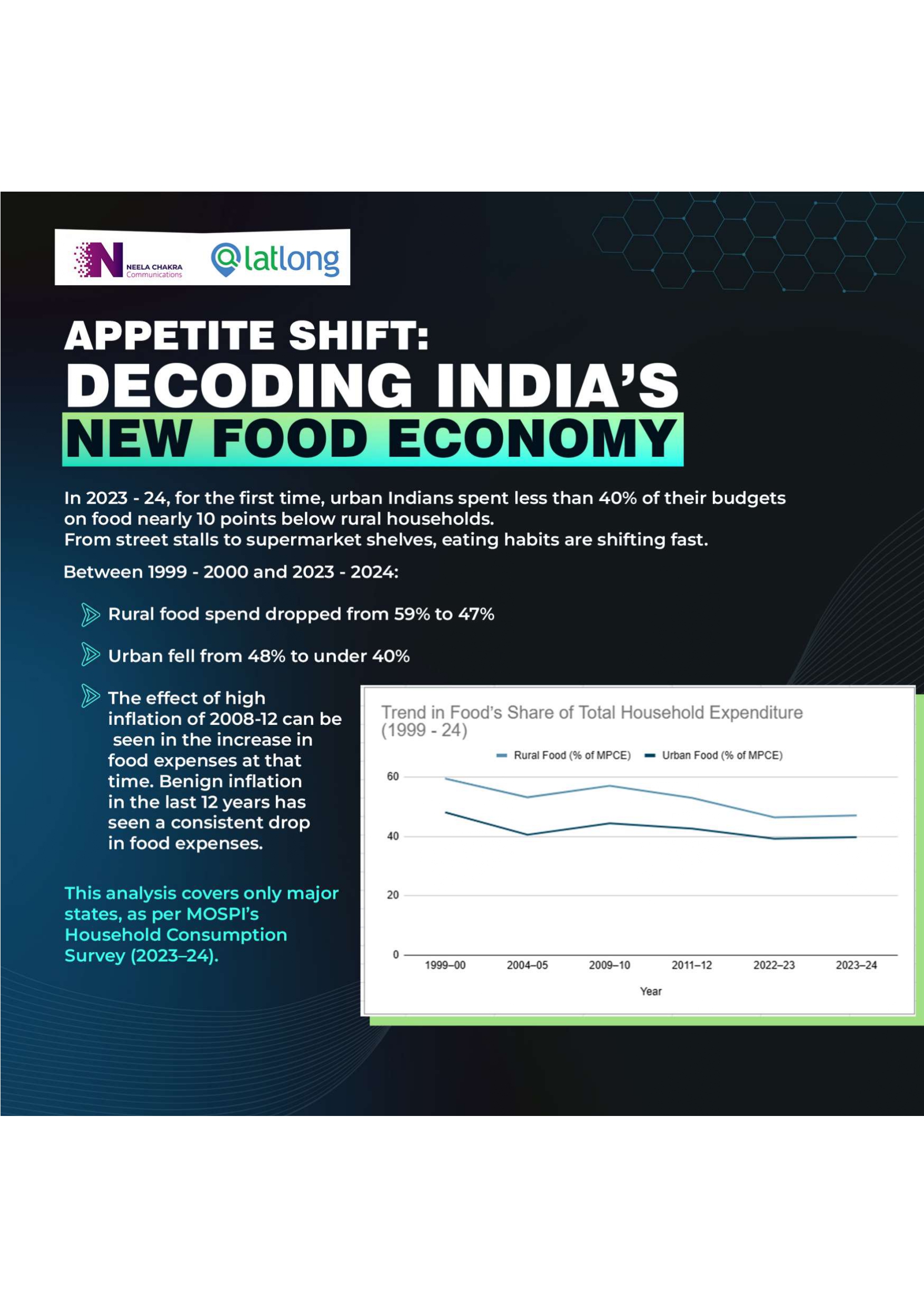
In 2023–24, for the first time, urban Indians spent less than 40% of their budgets on food — nearly 10 points below rural households. From street stalls to supermarket shelves, eating habits are shifting fast.
In 2023–24, for the first time, urban Indians spent less than 40% of their budgets on food — nearly 10 points below rural households. From street stalls to supermarket shelves, eating habits are shifting fast.
Between 1999–2000 and 2023–2024, rural food spend dropped from 59% to 47%, while urban fell from 48% to under 40%. The effect of high inflation in 2008–12 can be seen in increased food expenses at that time; benign inflation in the last 12 years has seen a consistent drop.
State-level Patterns
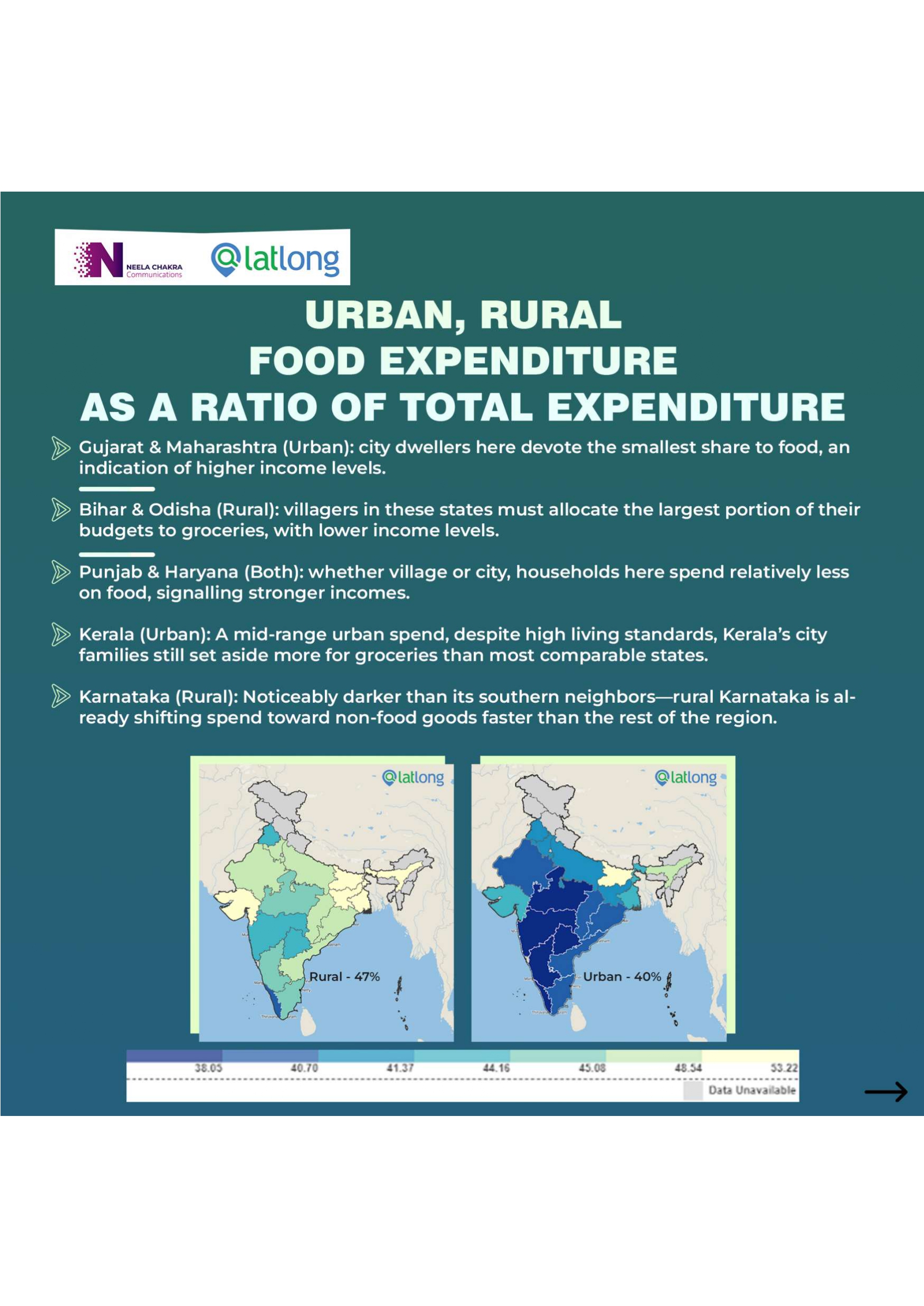
- Kerala: Even with higher living standards, Kerala's households still spend a large share on food — proof that rice-centric culinary culture runs deep.
- Punjab: One of the leanest food-budget shares in both villages and cities — families are shifting more income to non-food needs.
- Bihar: Rural Bihar remains one of India's most food-hungry regions, underscoring that income diversification is still catching up.
Dairy Over Meat? Still True
Nationally, for every ₹1 spent on non-veg, ₹3–4 goes to milk, veg, and fruit. But geography matters: Kerala and Bengal spend almost equally on seafood and produce, while Punjab and Haryana have almost entirely vegetarian diets. Dairy remains India's go-to protein.
Rice vs. Wheat: A Climate Story
Cereal preferences map to geography: South/East (Tropical) prefers rice while North/West (Temperate) prefers wheat. Urban diets show a slight tilt toward wheat everywhere.
Marketers' Blind Spot: Millets
Despite policy push, millets remain under 3% of cereal spend — mostly in Karnataka, Gujarat, and Maharashtra. To go mainstream, millets need better urban supply chains, value-added products, and stronger market support.
India's Food Story: 3 Big Shifts
- Food costs less (relatively) — urban Indians now spend under 40% on food, down from 48% in 1999.
- Bharat is milk country — dairy still beats meat and eggs across both cities and villages.
- Rice rules the plate — it's the dominant cereal in over half the country, especially in the south and east.
Engel's Law tells us: rising incomes shift spending to education, healthcare, transport, and communications, compressing food's budget share despite higher food outlays.
Data & Visualisations

Put location to work.
See how latlong.ai products fit your team. Book a 30-minute walkthrough with our solutions team.